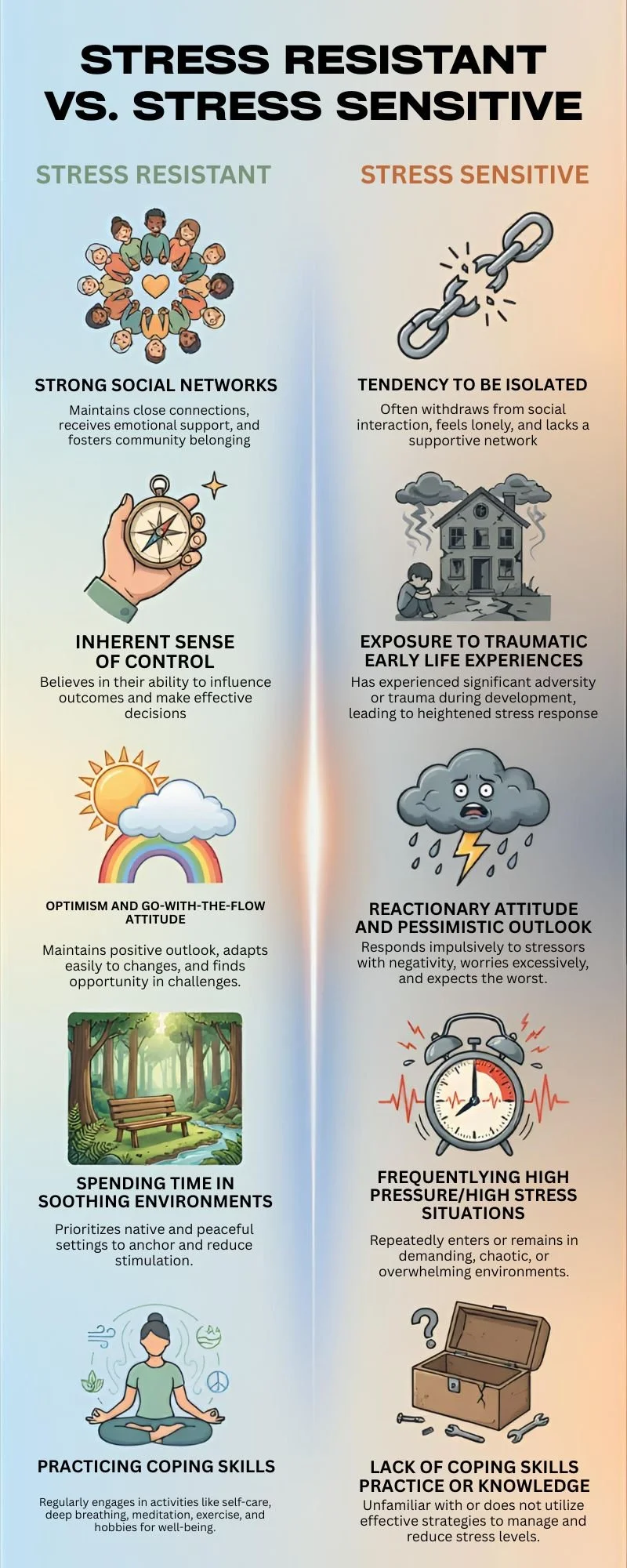
Are you stress resistant or sensitive?
By now we are aware that constant exposure to modern-day stress—driven by nonstop notifications, work-life blur, financial pressures, and social comparison—keeps the nervous system in a near-constant state of alert, degrading sleep, concentration, and immune function while increasing risks for anxiety, depression, and chronic disease; because these stressors are often chronic rather than acute, the body’s stress responses fail to reset, making recovery harder and turning what were once adaptive reactions into ongoing wear and tear that undermines physical resilience, emotional regulation, and long-term health.
These are the top 10 modern day stressors that increase your chronic stress symptoms
Uncertain future / global events
Relationship difficulties
Prolonged financial worries
Endless to do lists / Constant busyness / Lack of time
Discrimination (racial, gender, religion, etc)
Continuous worrying
Workplace pressure or burnout
Family obligations (parenting, care of elderly parent, etc)
Health issues / chronic illness
Personal safety concerns (safety in communities, random acts of violence, road rage, etc)
Are you stress resistant or stress sensitive?
Being stress resistant means your nervous system responds to challenges with measured calm, allowing you to recover quickly, maintain clear thinking, and keep routines and relationships steady; being stress sensitive means small pressures trigger larger emotional or physiological reactions, leading to prolonged recovery, disrupted focus, and a greater likelihood of avoidance or reactive behavior. Stress-resistant people tend to use effective coping strategies—problem-solving, realistic appraisal, and regular self-care—that prevent escalation, while stress-sensitive individuals often experience heightened anxiety, sleep disruption, or bodily symptoms that make coping harder and can create a feedback loop of increasing vulnerability. Neither trait is fixed: habits, supports, and targeted practices like paced breathing, consistent sleep, movement, and reframing can shift someone toward greater resilience, while chronic overload, poor rest, and isolation increase sensitivity. Recognizing your pattern—how quickly you escalate and recover—lets you choose specific tools and environmental changes to reduce harm and improve functioning.
Stress resistant individuals:
Have strong social networks
Have an inherent sense of control
Are optimistic and have a go with the flow attitude
Spend time in environments that are soothing to them
Practice coping skills (self care, breathing, meditation, etc)
Stress sensitive individuals:
Tend to be isolated
Have been exposed to traumatic early life experiences
Have a reactionary attitude and a pessimistic outlook
Put themselves into high pressure, high stress situations constantly
Don’t practice or don’t know how any coping skills